
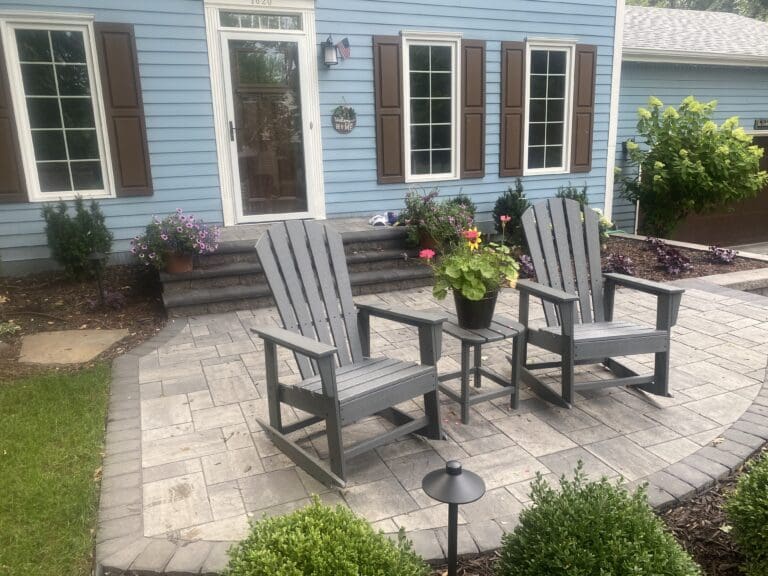
Installing a paver patio is one of the best investments you can make in your Minnesota home’s outdoor living space. However, once installation is complete, many homeowners face a common question: Do you really need to seal your paver patio?
While sealing isn’t strictly mandatory for structural integrity on day one, sealing your paver patio in Minnesota is strongly recommended. Minnesota’s extreme winter conditions, frequent freeze-thaw cycles, heavy snowmelt, and intense summer UV rays create harsh environmental challenges that quickly degrade unsealed pavers.
At Yellow Brick Road Pavers & Landscape, we’ve spent decades designing, building, and maintaining hardscapes across the Twin Cities metro area. Here is everything you need to know about whether sealing is right for your patio, how it protects your hardscape investment, and when you should do it.
Direct Answer: Why Minnesota Pavers Need Sealing
The Short Answer: Yes, Minnesota homeowners should seal their paver patios every 2 to 3 years. Unsealed concrete and brick pavers act like hard sponges—they absorb liquid water. During Minnesota winters, that trapped moisture freezes and expands over 40 to 60 times per season, causing surface scaling, cracking, and premature shifting.
How Minnesota Weather Damages Unsealed Paver Patios
To understand why sealer is so beneficial, it helps to understand what unsealed pavers endure in the Upper Midwest:
1. The Freeze-Thaw Cycle (40–60 Times Each Winter)
Minnesota experiences roughly 40 to 60 freeze-thaw cycles every winter. Water penetrates the porous surface of concrete pavers and joint sand. When temperatures drop below 32°F, that water freezes and expands by about 9%. This internal expansion forces tiny micro-cracks open, leading to spalling, surface scaling, and crumbling over time.
2. Joint Sand Washout & Weed Growth
Rainfall and snowmelt wash away uncompacted joint sand. Once joint sand breaks down or erodes, airborne seeds take root, leading to persistent weed, moss, and grass growth between your patio stones.
3. De-Icing Salts & Chemical Exposure
Winter de-icers and salt tracking melt ice into a corrosive brine that breaks down concrete binders. Without a barrier, salt causes pitted surfaces and unsightly white discoloration.
4. Color Fading from UV Exposure
Bright summer sunlight breaks down pigments in concrete pavers. Over a few seasons, vibrant reds, warm charcoals, and rich earth tones turn into dull, chalky gray.
4 Main Benefits of Sealing Your Paver Patio
Applying a premium hardscape sealer provides four distinct protective advantages:
- Moisture Defense & Salt Resistance: Sealer coats the surface pores, creating a hydrophobic (water-repellent) shield that prevents moisture penetration and salt damage during winter.
- Joint Sand Stabilization: Quality sealers lock joint sand (or polymeric sand) in place, binding the particles together to resist washout, ant hills, and weed seeds.
- Stain Resistance: A sealed surface repels grill grease, fallen leaves, tree sap, spilled wine, and dirt, making seasonal cleaning as easy as a light power wash.
- Enhanced Aesthetics: Depending on the finish you choose (matte, satin, or wet-look), sealing deepens the natural colors of your pavers and restores faded older patios.
Penetrating vs. Film-Forming Sealers: Which Should You Use?
Choosing the right type of sealer is crucial for Minnesota’s climate:
| Feature | Penetrating Sealers (Silane/Siloxane) | Film-Forming Sealers (Acrylic/Polyurethanes) |
|---|---|---|
| How it Works | Soaks deep into the paver pores; breathable | Forms a protective topical coat on top |
| Appearance | Natural, invisible look; no gloss | Enhances color; available in Satin or “Wet-Look” gloss |
| Freeze-Thaw Defense | Excellent (allows trapped moisture vapor to escape) | Great, provided it’s breathable and properly applied |
| Lifespan | 3 to 5 years | 2 to 3 years |
| Best For | Slip resistance, high-moisture zones, natural stone | High visual enhancement, color revival, sand locking |
Pro Tip from Yellow Brick Road Pavers: Always use a breathable sealer in Minnesota. Non-breathable coatings can trap ground moisture under the film, turning milky white during severe winter freezes.
When Not to Seal Right Away
If you just installed a brand-new paver patio, do not seal it immediately!
Newly manufactured concrete pavers undergo a natural curing process that releases microscopic salt deposits called efflorescence. Efflorescence shows up as a hazy white film on the surface.
- Wait 60 to 90 days after installation before applying sealer to allow efflorescence to naturally escape.
- Perform a deep cleaning with an efflorescence cleaner prior to sealing to avoid locking stains under the seal coat.
How Often Should You Reseal Pavers in Minnesota?
For most Twin Cities homeowners, resealing every 2 to 3 years strikes the ideal balance between long-term protection and cost efficiency. High-traffic driveways or heavily shaded patios near pool decks may benefit from touch-ups sooner, while low-traffic back patios can stretch closer to 3 years.
Frequently Asked Questions (FAQ)
1. Does sealing a paver patio make it slippery when wet?
Not if applied correctly. High-gloss topical sealers can become slick, but professional contractors blend anti-slip additives (micro-fine silica grit) into top coats or use natural-finish penetrating sealers to preserve traction.
2. Can I seal my paver patio myself, or should I hire a professional?
While DIY sealer products exist, professional application ensures proper surface cleaning, efflorescence removal, joint sand stabilization, and even coat distribution. Incorrectly applying sealer over dirt or moisture can cause white clouding that requires stripping.
3. What is the best time of year to seal pavers in Minnesota?
Late spring through early autumn is ideal. Sealer requires dry conditions with outdoor air and surface temperatures consistently above 50°F to cure properly.
4. Will sealing eliminate weeds completely?
Sealing stabilizes joint sand, drastically reducing the space where weed seeds take root. While stray seeds blown onto surface dirt may sprout occasionally, they are easy to wipe away and won’t penetrate deep roots.
Protect Your Investment with Yellow Brick Road Pavers & Landscape
Your patio is an extension of your home. Protecting it against Minnesota’s winters ensures decades of outdoor enjoyment. If you’re ready to restore, re-sand, or seal your hardscape, contact the local experts at Yellow Brick Road Pavers & Landscape today!
👉 Schedule Your Free Hardscape Consultation at PaverInstaller.com
