
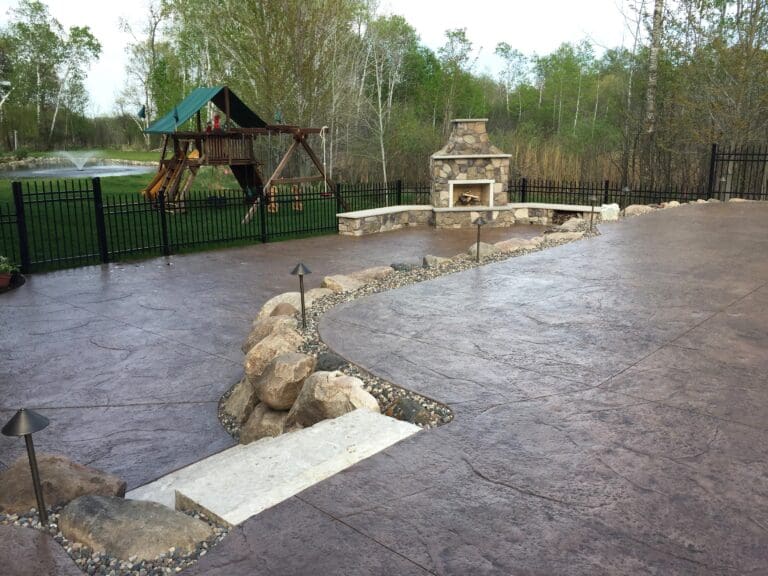
Minnesota winters test the durability of patios, walkways, and retaining walls. Severe freeze-thaw cycles cause trapped water to expand, cracking stone surfaces and heaving paver bases. Taking a few proactive steps each fall protects your hardscape investment and prevents costly spring repairs.
At Yellow Brick Road Pavers & Landscape, we build and maintain high-performance outdoor living spaces designed for Midwest climate challenges. Here is how to prepare your stone features for the cold months ahead.
Clear Debris and Inspect Paver Joints
Organic matter like leaves, soil, and twigs traps moisture against paver surfaces and rots inside joint gaps. Before the first freeze, sweep all debris off your patio and clear out weeds or moss growing between stones.
Inspect your jointing material. Polymeric sand acts as a flexible barrier that keeps water out of the aggregate base beneath your pavers. If sand levels drop below the chamfered edge of the stones, wash out loose material, let the patio dry completely, and sweep fresh polymeric sand into the joints.
Apply High-Performance Paver Sealers
Unsealed stone, concrete pavers, and porous natural rock absorb groundwater easily. When temperature drops cause that trapped moisture to freeze, it expands by roughly 9%, causing surface spalling, flaking, and structural cracking.
Applying a breathable, deep-penetrating sealer blocks moisture absorption while allowing trapped vapor to escape. Seal your hardscapes every 3 to 5 years before fall temperatures drop consistently below 50°F to ensure proper curing.
Winter Protection for Steps and Fire Features
Specialty features like freestanding walls, custom paver steps, and outdoor kitchens require targeted winter prep to avoid frost damage:
Fire Pits and Fireplaces
Clean out ash and debris from wood-burning pits, as wet ash accelerates metal liner corrosion. Shut off gas lines leading to outdoor fire features and drain remaining line moisture. Cover stone fire units with fitted, weatherproof vinyl covers to keep melting snow out of internal cracks.
Paver Steps and Retaining Walls
Ensure drainage channels behind retaining walls remain clear of leaves so runoff drains freely before the ground freezes solid. Avoid harsh chemical deicers like rock salt (sodium chloride) on steps and patios; use calcium magnesium acetate (CMA) or plain coarse sand for safe winter traction without eroding stone surfaces.
Professional Hardscape Winterization Services
Preparing your hardscapes properly requires the right materials, structural knowledge, and timing. Yellow Brick Road Pavers & Landscape offers professional fall prep, polymeric sand restoration, and protective sealing services built to safeguard your property through every Minnesota winter.
Frequently Asked Questions
Can I use rock salt on my paver patio or stone steps during winter?
No. Rock salt (sodium chloride) breaks down the protective sealers and surface finish of concrete pavers, causing pitting and flaking. Use coarse sand for traction or safe deicers like calcium magnesium acetate (CMA).
When is the best time to apply paver sealer in Minnesota?
Early to mid-autumn is ideal. Paver sealers require dry conditions and ground temperatures consistently above 50°F to cure correctly before snow and sub-freezing temperatures arrive.
What causes paver patios to heave and shift during Minnesota winters?
Paver heaving occurs when water collects beneath the stones in the sub-base layer and freezes. Proper excavation, geotextile fabric installation, compacted aggregate bases, and intact polymeric sand joints prevent water buildup and stop heaving.
