
Owning a lakefront property in Minnetonka offers some of the most breathtaking views in the Twin Cities. However, those sweeping vistas often come with a serious geographical challenge: deeply sloped lots that drop aggressively toward the water.
Managing a heavy slope on a lakefront property isn’t just about making your yard look nice; it is a critical matter of structural engineering, shoreline stabilization, and erosion control. Stacking a few landscape blocks from a big-box store won’t cut it when thousands of tons of earth are pushing down toward the water.
When protecting your biggest investment, you need the right team. Here is exactly what you should look for when choosing a Minnetonka retaining wall builder for complex, steeply sloped lakefront lots.
1. Look for Deep Expertise in Watershed and Municipal Permitting
Building on a standard backyard hill is one thing; building a retaining wall on a Lake Minnetonka shoreline is an entirely different legal and environmental task.
Any structural wall built near the water will likely trigger strict regulations from the Minnehaha Creek Watershed District (MCWD), alongside standard Minnetonka municipal building permits. In Minnesota, any retaining wall with an exposed height over 4 feet requires a structural engineer’s stamp and a formal building permit.
The right contractor won’t make you navigate this legal red tape alone. Your builder must have a proven track record of coordinating with local watershed districts and securing the necessary structural permits before a single shovel touches your soil.
2. Prioritize Hydrostatic Pressure Mitigation and Advanced Drainage
Why do so many amateur retaining walls lean, bulge, or completely collapse after a few seasons? The culprit is almost always water.
Minnesota’s heavy clay soils naturally hold massive amounts of moisture. When you add a deep slope into the mix, gravity forces rain and snowmelt directly down toward the back of your wall. During our brutal freeze-thaw cycles, that trapped water expands into ice, creating immense hydrostatic pressure that pushes against the structure.
A premier lakefront builder knows that a retaining wall is actually a drainage system in disguise. Ensure your builder implements:
- Massive clear aggregate backfill to let water filter down freely.
- Perforated drain tiles (French drains) wrapped in commercial filter fabric to route water away safely.
- Structural geogrid reinforcement to tie the wall mechanically back into the hillside.
3. Choose a Team with a Fully In-House Crew (No Subcontractors)
Deeply sloped lakefront lots present tight access points, fragile shorelines, and highly technical construction demands. You cannot afford to have a contractor who passes your project off to unvetted, rotating sub-crews.
At Yellow Brick Road Pavers & Landscape, we bring over 35 years of industry experience with a fully in-house team. Because we never subcontract, our highly trained hardscape specialists control every step of the installation—ensuring consistent, award-winning craftsmanship that stands up to the most demanding terrains.
4. Evaluate Material Mastery: Modular Blocks vs. Natural Boulders
A great builder won’t push a one-size-fits-all solution. For heavily sloped lakefronts, they should help you choose the best material for your specific grade and aesthetic goals:
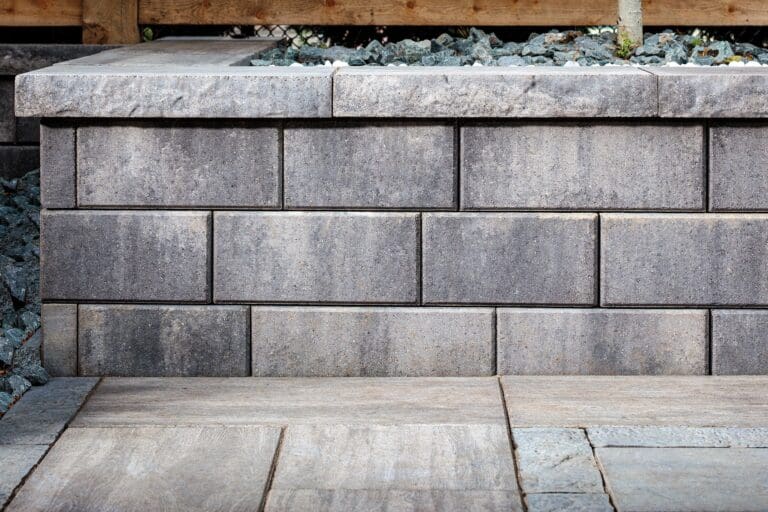
- Segmental Retaining Walls (SRW): Using premium engineered systems from industry leaders like Anchor, Belgard, or Borgert provides exceptional structural precision. These pinning or interlocking blocks are perfect for creating terraced slopes, seamlessly integrated staircases, and crisp, modern lines.
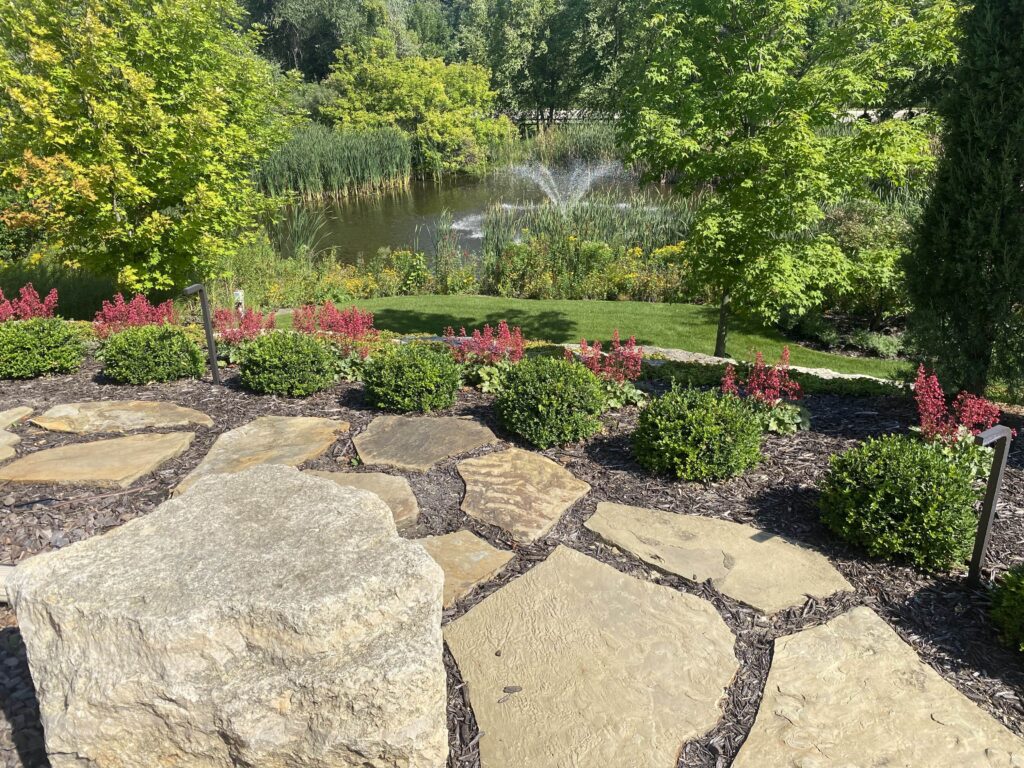
- Natural Boulder Outcroppings: Utilizing local fieldstone or Chilton boulders creates an organic, timeless look that blends flawlessly with the natural Minnetonka shoreline. Boulders are incredibly effective at handling natural grade changes on highly irregular terrain.
FAQ
How high can a lakefront retaining wall be built?
Retaining walls can be engineered to almost any height using a terraced (multi-tiered) design, which is highly recommended for extreme slopes. However, keep in mind that any single wall exceeding 4 feet in exposed height requires a municipal building permit and engineered plans in Minnetonka.
What is the Minnehaha Creek Watershed District (MCWD), and why does it matter?
The MCWD regulates grading and shoreline alterations around Lake Minnetonka to protect water quality and prevent erosion. Any retaining wall construction within the shoreline buffer zone requires strict adherence to their environmental guidelines and specific permitting before work can begin.
Can a retaining wall help create more usable yard space on a steep slope?
Yes, absolutely. By installing a single engineered wall or a series of terraced retaining walls, a steep, unusable hillside can be transformed into level, highly functional tiers perfect for paver patios, lawns, or lakeside pathways.
