
When it comes to boosting your home’s curb appeal and durability, your driveway plays a massive role. For homeowners in the Minneapolis-St. Paul metro area, choosing the right material isn’t just about looks—it’s about surviving the dramatic Minnesota seasons.
Two of the most popular options on the market are poured concrete and brick pavers. But how do they truly match up against each other in the unique climate of the Twin Cities?
In this article, we’ll break down the pros and cons of poured concrete versus brick driveways, focusing on cost, longevity, aesthetics, and how they handle our infamous freeze-thaw cycles.
1. Durability and Climate Resilience
Minnesota winters are notoriously brutal on outdoor surfaces. The constant freezing and thawing of moisture in the ground causes the earth to shift, which directly impacts your driveway.
- Poured Concrete: While poured concrete is rigid and strong, its rigidity is also its downfall in the Twin Cities. As the ground shifts beneath it during deep winter freezes, poured concrete cannot flex. Consequently, it is highly prone to cracking. Once a crack forms, water seeps in, freezes, and worsens the damage.
- Brick Driveways (Interlocking Pavers): Brick pavers offer a flexible pavement system. Because they are individual pieces fitted tightly together over a sand and gravel base, they naturally flex and shift with the movement of the earth. When the spring thaw arrives, they settle back into place without cracking.
2. Maintenance and Repair Costs
No driveway is completely maintenance-free, but how you handle repairs makes a massive difference in your long-term budget.
- Poured Concrete: When concrete cracks or stains, repairing it seamlessly is nearly impossible. Patching cracks leaves unsightly scars, meaning you often have to tear out and replace entire slabs to restore a clean look. Furthermore, concrete is highly susceptible to staining from oil spills and scaling from driveway de-icing salts.
- Brick Driveways: Maintaining brick pavers is remarkably straightforward. If a single brick gets stained by an oil leak or damaged, you can easily pop out that specific paver and replace it with a new one—no heavy machinery required. Applying a high-quality sealant every few years keeps them looking pristine and completely protects them against salt damage.
3. Aesthetics and Property Value
Your driveway makes up a significant portion of your home’s exterior. Investing in premium materials can drastically elevate your property’s market value.
- Poured Concrete: Standard poured concrete offers a clean, minimalist look, but it can quickly feel sterile or dated. Stamped or stained concrete adds visual interest, but it remains vulnerable to the same cracking issues over time.
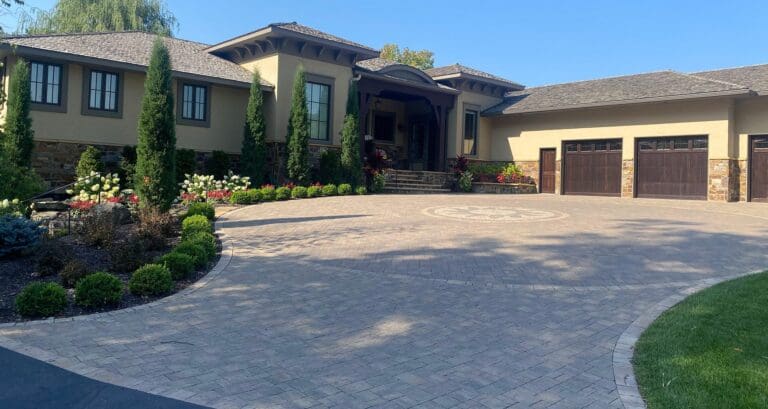
- Brick Driveways: Brick pavers offer unmatched timeless elegance and luxury. With a vast array of colors, shapes, and patterns available, you can design a custom driveway that perfectly complements your home’s architecture. This premium aesthetic translates directly into increased curb appeal and a higher resale value for Twin Cities homes.
4. Lifespan: Which Lasts Longer?
A driveway is a long-term investment, so you want a material that stands the test of time.
- Poured Concrete: On average, a well-maintained poured concrete driveway in Minnesota lasts about 15 to 20 years before cracks and surface scaling necessitate a full replacement.
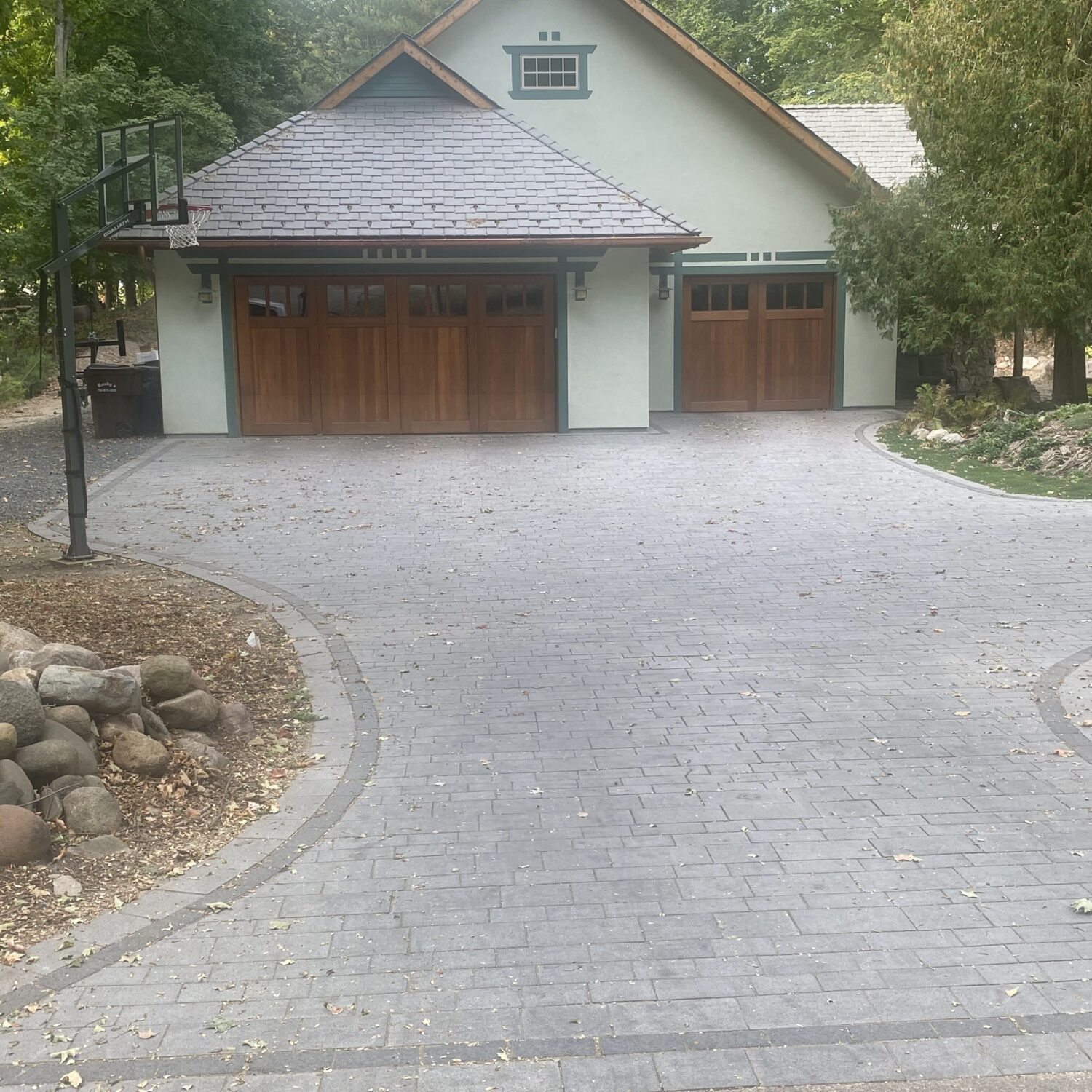
- Brick Driveways: When professionally installed by experts like Yellow Brick Road Pavers & Landscape, a brick paver driveway can easily last 30 to 50 years—often outliving the house itself.
The Verdict: Which is Best for the Twin Cities?
While poured concrete offers a lower initial installation cost, its vulnerability to Minnesota’s freeze-thaw cycles often leads to early cracking and costly repairs. On the other hand, brick driveways offer superior durability, flexible strength, effortless repairability, and premium curb appeal that lasts for decades.
Ready to transform your home’s entrance? Contact Yellow Brick Road Pavers & Landscape today at paverinstaller.com to schedule a consultation and get a custom quote for your Twin Cities home.
FAQ
Which driveway material handles Minnesota winters better? Brick pavers handle Minnesota winters much better than poured concrete. Because brick pavers are individual units, they flex naturally with the ground’s freeze-thaw cycles without cracking, unlike rigid poured concrete.
Is concrete or brick cheaper to install? Poured concrete generally has a lower upfront installation cost than brick pavers. However, because brick pavers last significantly longer and are much cheaper to repair, they frequently cost less over their total lifespan.
Can you use snowmelt salt on a brick driveway? Yes, but you should use it cautiously. While high-quality brick pavers are highly resistant to de-icing salts compared to concrete, we recommend using calcium chloride rather than rock salt (sodium chloride) to protect both the pavers and your surrounding landscaping.
