
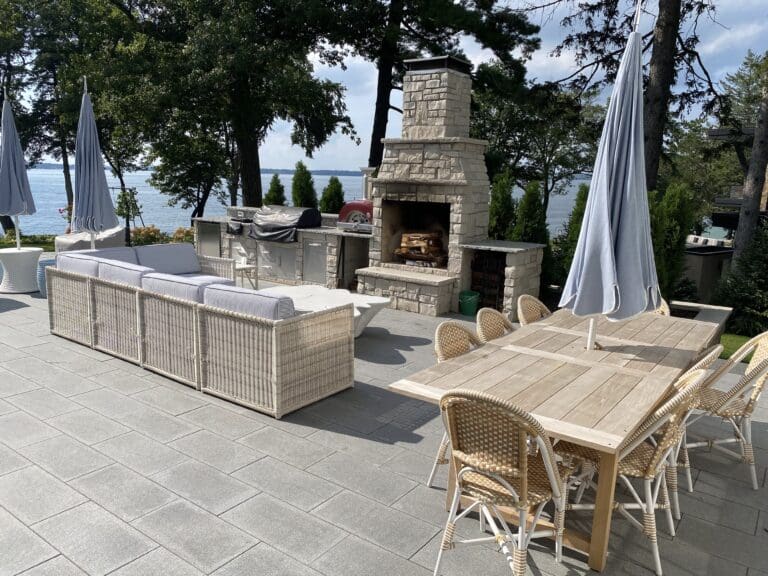
A luxury outdoor kitchen is one of the finest investments you can make for your Twin Cities home. From high-end stainless steel grills and outdoor refrigerators to custom granite countertops and stone paver bases, these features deliver an incredible entertaining experience during Minnesota summers. However, as autumn leaves fall and the first severe frost approaches, high-end outdoor kitchens face one of the harshest winter environments in North America.
Sub-zero temperatures, deep ground freezes, and unpredictable freeze-thaw cycles can wreak havoc on outdoor plumbing, natural stone surfaces, and high-end appliances if they aren’t properly protected. At Yellow Brick Road Pavers & Landscape, we have spent over 35 years building and maintaining luxury outdoor living spaces across the Minneapolis-Saint Paul metro area. Here is your definitive checklist to winterizing your luxury outdoor kitchen before the ground freezes solid.
1. Shutdown and Blow Out the Outdoor Plumbing
Trapped water is the number one enemy of a Minnesota outdoor kitchen. When water freezes, it expands by roughly 9%, generating enough pressure to rupture copper pipes, crack brass faucet valves, and ruin under-sink water lines.
- Shut Off the Main Valve: Turn off the dedicated indoor supply valve leading to your outdoor kitchen.
- Drain and Blow Out Lines: Open all outdoor sink faucets, beverage station lines, and hose bibs to drain standing water. To ensure zero water remains in low points, have a professional use an air compressor (regulated to ~60 PSI) to completely blow out all supply lines.
- Disconnect Add-Ons: Disconnect drain traps, water lines feeding ice makers, and inline water filters. Leave sink valves open slightly through the winter to release any residual pressure.
2. Power Down and Prep Cold-Sensitive Appliances
Outdoor refrigerators, wine coolers, and ice makers are built to withstand rain and heat, but their compressors and water lines are vulnerable to frozen conditions.
- Refrigerators and Freezers: Unplug units or shut off their dedicated circuit breakers. Empty all contents, thoroughly clean the interior with mild soap and water, dry completely to prevent mold growth, and leave the doors slightly propped open to allow air circulation.
- Ice Makers: Shut off the water supply line, run the remaining ice cycle until empty, drain the internal reservoir completely, and power off the unit.
3. Deep-Clean and Protect the Built-In Grill
Leftover grease and food particles attract winter pests and trap ambient moisture, leading to rust and oxidation over the long winter months.
- Scrub the Interior: Burn off heavy debris at high heat, then scrub grates, heat plates, and burner tubes with a stainless steel wire brush. Empty and clean the grease collection tray.
- Season Grates and Turn Off Gas: Coat iron or stainless steel grates with a high-heat cooking oil to create a protective moisture barrier. Shut off the gas line valve (or disconnect propane tanks).
- Apply Polish and Cover: Treat all exterior stainless steel surfaces with a high-grade stainless steel cleaner or polish to guard against corrosion. Finish with a breathable, custom-fitted waterproof cover—never use tight plastic tarps that trap condensation underneath.
4. Seal Natural Stone and Granite Countertops
Granite, bluestone, and concrete countertops are naturally porous. If moisture seeps into micro-fissures or unsealed joints and freezes, it can cause small cracks, surface flaking, or structural spalling.
Apply a breathable, cold-weather penetrating stone sealer to all countertop surfaces before freezing temperatures set in. Inspect the caulking and silicone sealant around sink cutouts, stone veneers, and backsplashes, replacing any cracked or pulling caulk with a flexible, cold-weather rated silicone.
5. Protect Paver Base Foundations and Surrounding Hardscapes
Your outdoor kitchen sits on a heavy hardscape foundation—typically high-density pavers or reinforced stone footings. Ensuring your paver patio is prepped prevents winter frost heaving from misaligning built-in cabinetry or countertops.
Sweep the paver surface thoroughly, remove debris from perimeter drainage paths, and ensure jointing sand (such as polymeric sand) is fully intact between pavers. Solid sand joints keep meltwater from penetrating deep into the sub-base where severe freeze-expansion occurs.
Winterizing Your Luxury Outdoor Kitchen
| Component | Key Winterizing Action | Why It Matters for MN Winters |
|---|---|---|
| Plumbing & Sinks | Shut off supply valve; blow lines clean with air compressor | Prevents trapped water from freezing and bursting underground pipes |
| Fridges & Ice Makers | Cut power, drain lines, clean interior, prop doors open | Protects internal pumps and prevents mildew buildup |
| Grill & Burners | Degrease, coat grates in oil, turn off gas, fit breathable cover | Prevents winter corrosion, component rust, and pest infestation |
| Stone Countertops | Apply penetrating sealer; re-caulk joints with silicone | Blocks moisture absorption to stop ice cracking and surface spalling |
| Paver Base | Ensure full polymeric sand joints and clear drainage channels | Prevents deep sub-base freezing and frost-heave shifting |
Built to Last: The Power of Engineering
The secret to an outdoor kitchen that survives decades of Minnesota winters starts long before the cold sets in—it begins with proper engineering and excavation. At Yellow Brick Road Pavers & Landscape, we design and build outdoor kitchens with climate-resilient foundations, proper drainage slopes, and premium materials designed specifically for the Upper Midwest. Winterizing your luxury outdoor kitchen ensures it opens effortlessly when spring returns to the Twin Cities.
Frequently Asked Questions
When should I winterize my Minnesota outdoor kitchen?
You should complete outdoor kitchen winterization in late September or October, well before the first sustained overnight freeze hits the Twin Cities area.
Can I leave an outdoor refrigerator outside during a Minnesota winter?
Yes, stainless steel outdoor-rated refrigerators can stay outside, but they must be turned off, thoroughly cleaned, completely dry inside, and disconnected from power and water sources.
Do I need to cover granite countertops in the winter?
While granite doesn’t necessarily require a full tarp, it must be sealed with a penetrating stone sealer before winter to stop water from soaking into micro-pores and freezing.
How do I stop pipes from freezing if my kitchen has a hot water heater?
Any outdoor water heaters must be turned off, completely drained of all standing water, and blown out with compressed air to prevent internal tank and valve failure.
