
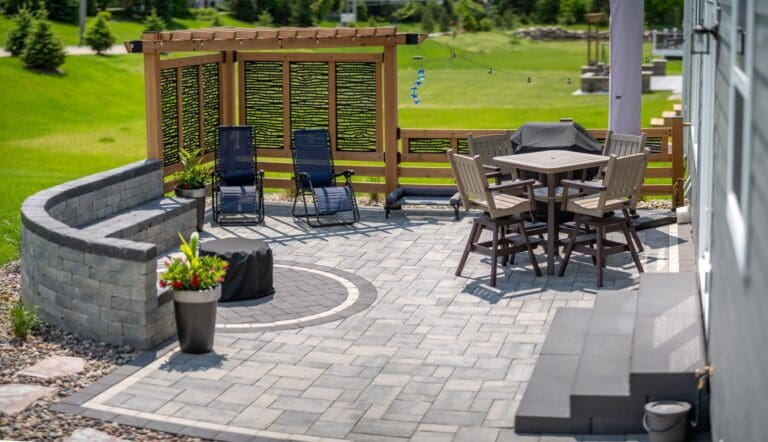
Selecting the right paver color palette for a new patio, walkway, or driveway is one of the most exciting outdoor home improvement decisions you will make. However, with hundreds of stone, brick, and concrete options available, choosing the right color palette can feel overwhelming. In the Minneapolis-Saint Paul metro area, your hardscape colors need to do more than just look good on a sample board—they must harmonize with your home’s exterior architecture, adapt to changing seasonal sunlight, and hold up through intense winter weather.
At Yellow Brick Road Pavers & Landscapes, we have over 35 years of experience helping Twin Cities homeowners design and install custom hardscapes that elevate curb appeal and property value. Here is our expert guide on how to choose the perfect paver color palette for your property.
1. Match Tone and Architectural Style, Not Exact Colors
A common mistake homeowners make is trying to match their paver color exactly to their home’s siding or brick exterior. This creates a washed-out, monochromatic look where the hardscape blends too heavily into the house. Instead, aim for complementary contrast.
- Traditional Brick Homes: Earthy tones like warm tans, charcoal accents, or subtle terracotta blends complement classic red or historic brickwork without competing with it.
- Modern & Craftsman Homes: Cool grays, dark graphite, and slate tones pair exceptionally well with contemporary siding, stone veneers, and bold trim colors.
- Stucco & Stone Exteriors: Cream, limestone, and soft buff-colored pavers provide a natural, cohesive transition from warm-toned stucco or natural stone facades.
2. Consider the 3-Tone Hardscape Rule
Professional hardscape designers rarely stick to just one paver color. To create visual depth and structure, follow the 3-tone color rule:
- Primary Field Color (70-80%): The dominant paver shade that makes up the bulk of your patio or driveway surface. Select a neutral or subtle multi-blend to avoid a chaotic surface appearance.
- Border or Banding Color (15-20%): A contrasting shade—often darker, like charcoal or deep chocolate—used along the perimeter edges to frame the installation.
- Accent or Accent Wall Tone (5-10%): A rich tone incorporated into retaining wall caps, fire pit banding, or inlay patterns to tie the entire outdoor living space together.
3. Account for Minnesota’s Lighting and Seasonal Changes
In Minnesota, environmental lighting changes dramatically between summer and winter. Natural sunlight in the Twin Cities swings from bright, high-overhead summer glare to low, cool-toned winter light. Additionally, pavers look completely different when wet from rain or snowmelt compared to when they are dry.
Before making a final choice, request physical paver samples from your contractor. Place them directly against your home’s foundation and view them in direct sunlight, shade, and wet conditions to ensure you love the color blend in every season.
4. Align Color Selection with Functional Care
Color choice also affects how your hardscape performs on a day-to-day basis:
- Driveways: Mid-tone blends and multi-color pavers (such as charcoal-and-tan blends) are ideal for driveways because they naturally mask tire marks, oil drips, and winter road salt residue. Very light, solid-colored pavers show dirt faster.
- Full-Sun Patios: Lighter paver shades (like limestone, buff, or light gray) absorb far less thermal energy than dark charcoal slabs, keeping the surface cooler on bare feet during July and August heatwaves.
Paver Color Selection Matrix for Twin Cities Homes
| Home Exterior Style | Recommended Primary Field Color | Recommended Border Accent | Best Practical Application |
|---|---|---|---|
| Classic Red Brick | Warm Tan, Buff, or Charcoal Multi-blend | Deep Charcoal or Dark Brown | Creates rich contrast while honoring traditional architecture |
| Modern Siding / Dark Trim | Mid-Tone Slate Gray or Granite Slabs | Midnight Black or Graphite | Delivers clean lines and a contemporary urban look |
| Beige / Stucco / Limestone | Cream, Sandstone, or Soft Taupe | Rich Walnut or Slate Accent | Establishes a bright, warm, resort-style backyard patio |
| High-Traffic Driveways | Multi-tone Charcoal & Earth Blends | Solid Slate Border | Conceals vehicular wear, dirt, and winter salt scaling |
Why In-House Installation and Quality Materials Matter
Even the most stunning color palette requires precision installation to stay vibrant and level for decades. Quality paver lines manufactured by trusted regional brands—such as Borgert, Belgard, Anchor, and Interlock—utilize rich, UV-resistant pigments and high-density concrete mixes that prevent fading over time. At Yellow Brick Road Pavers & Landscapes, our fully in-house installation crews handle every step of sub-base excavation, compaction, and edge restraint without relying on subcontractors—ensuring your custom color scheme remains structurally sound and visually striking through every Minnesota season.
Frequently Asked Questions
Should my pavers match my house or contrast with it?
Pavers should complement your house rather than match it exactly. Choose a shade that sits a step lighter or darker than your exterior siding or brick, using contrasting borders to create defined lines.
Do concrete paver colors fade in the sun over time?
High-quality architectural pavers made by leading manufacturers use mineral oxide pigments cured under pressure to resist sun fading. Regular sweeping and occasional sealing will keep colors vibrant for decades.
What paver colors stay coolest under full summer sunlight?
Light-colored pavers—such as buff, light tan, cream limestone, and light gray—reflect radiant heat and stay significantly cooler on barefoot pool decks and full-sun patios during warm months.
How do I test paver colors against my home before buying?
Ask your hardscape contractor for physical stone samples. Place the samples against your foundation and view them at different times of day, under both dry and wet conditions, to see how the color responds to natural light.
